Sensing the heat, 2026
01
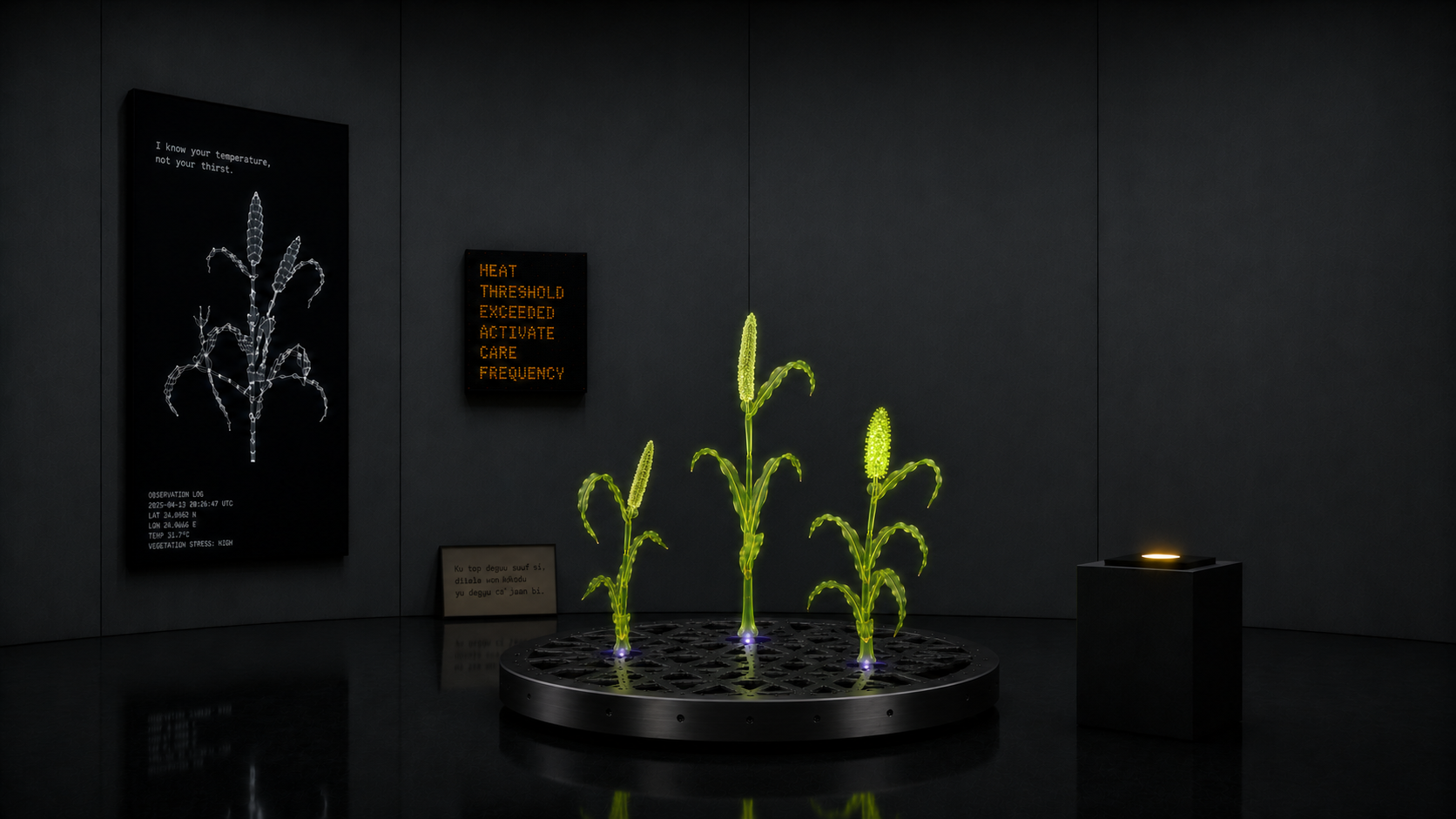
Sensing the Heat, installation study
/01


Sensing the Heat explores how different systems observe, interpret and respond to the same thermal condition. Every system begins with observation. Satellites register thermal radiation; forthcoming missions such as FLEX are designed to detect the faint fluorescence emitted by vegetation. Plants register environmental change through metabolic processes. Some learn to read the world through birds, winds, stars, vegetation, and animal behaviour.Human bodies sense heat through the skin.
The installation asks not which system is correct, but how different ways of observing the world determine what counts as a sign.
Stay tuned for more.