we shall by morning inherit the Earth, 2025
STUMPS ● CHAINSAW ● SPRAYER ● VIDEO ● SOUNDSCAPE ● WALLPAPER ● FUNGI
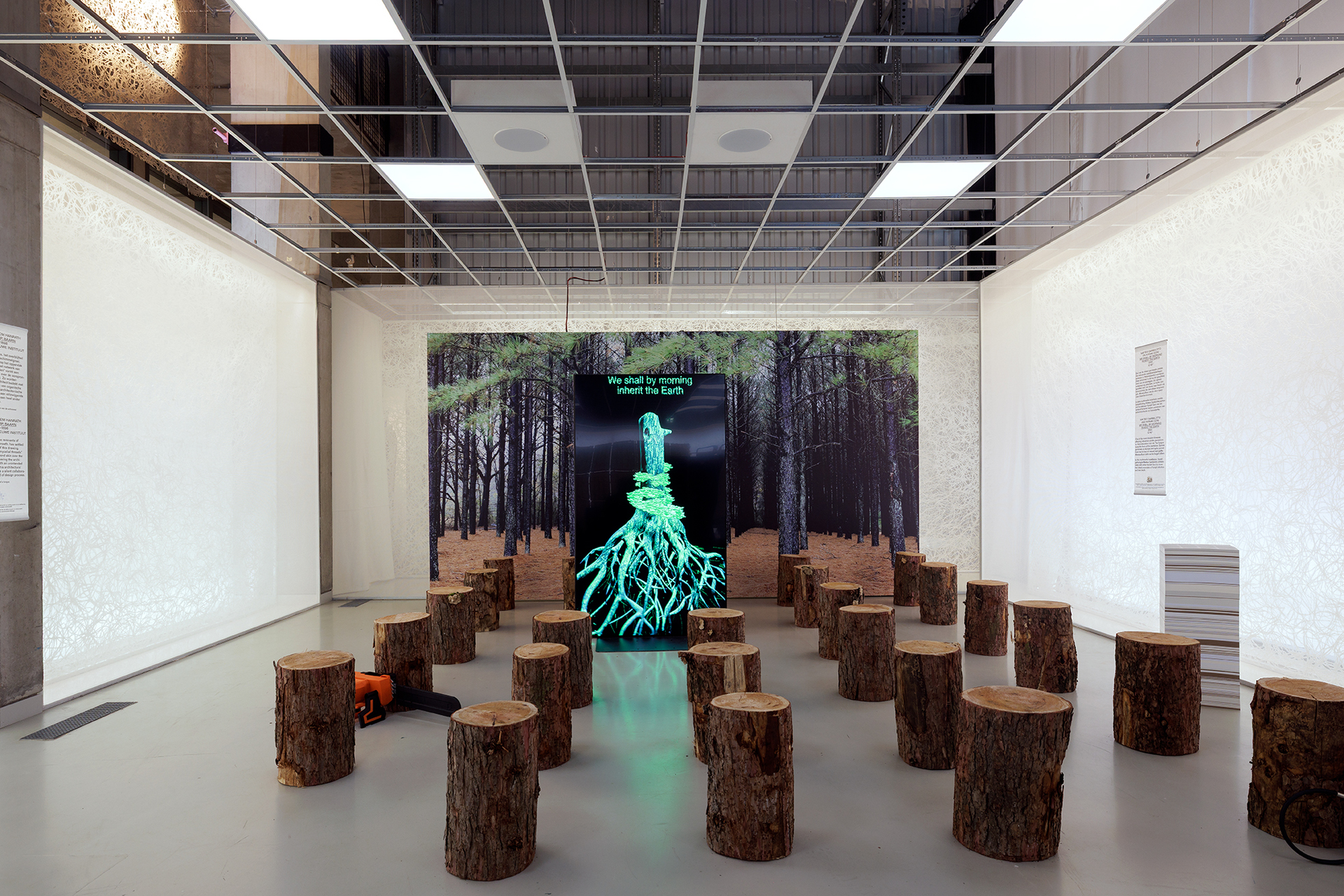
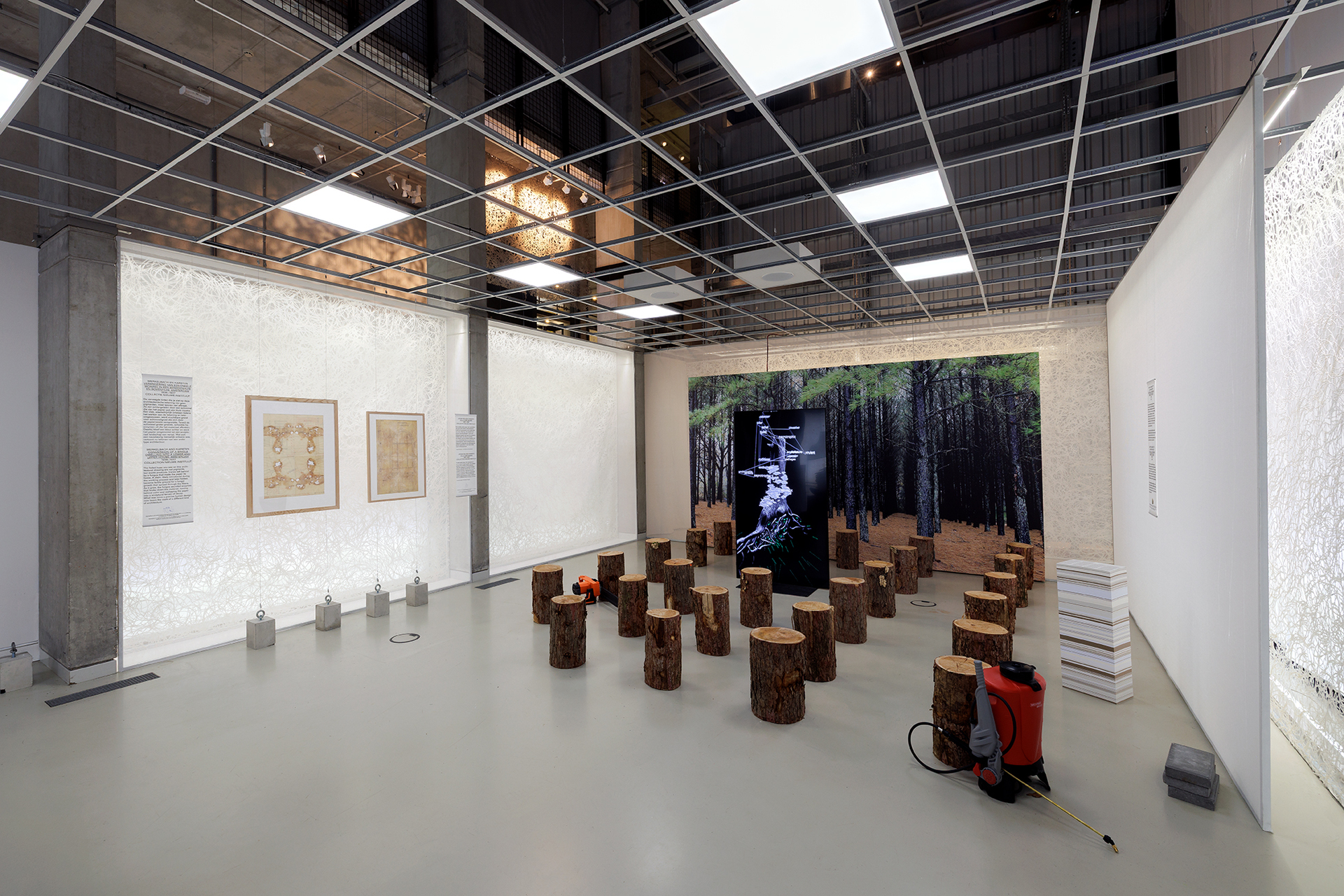
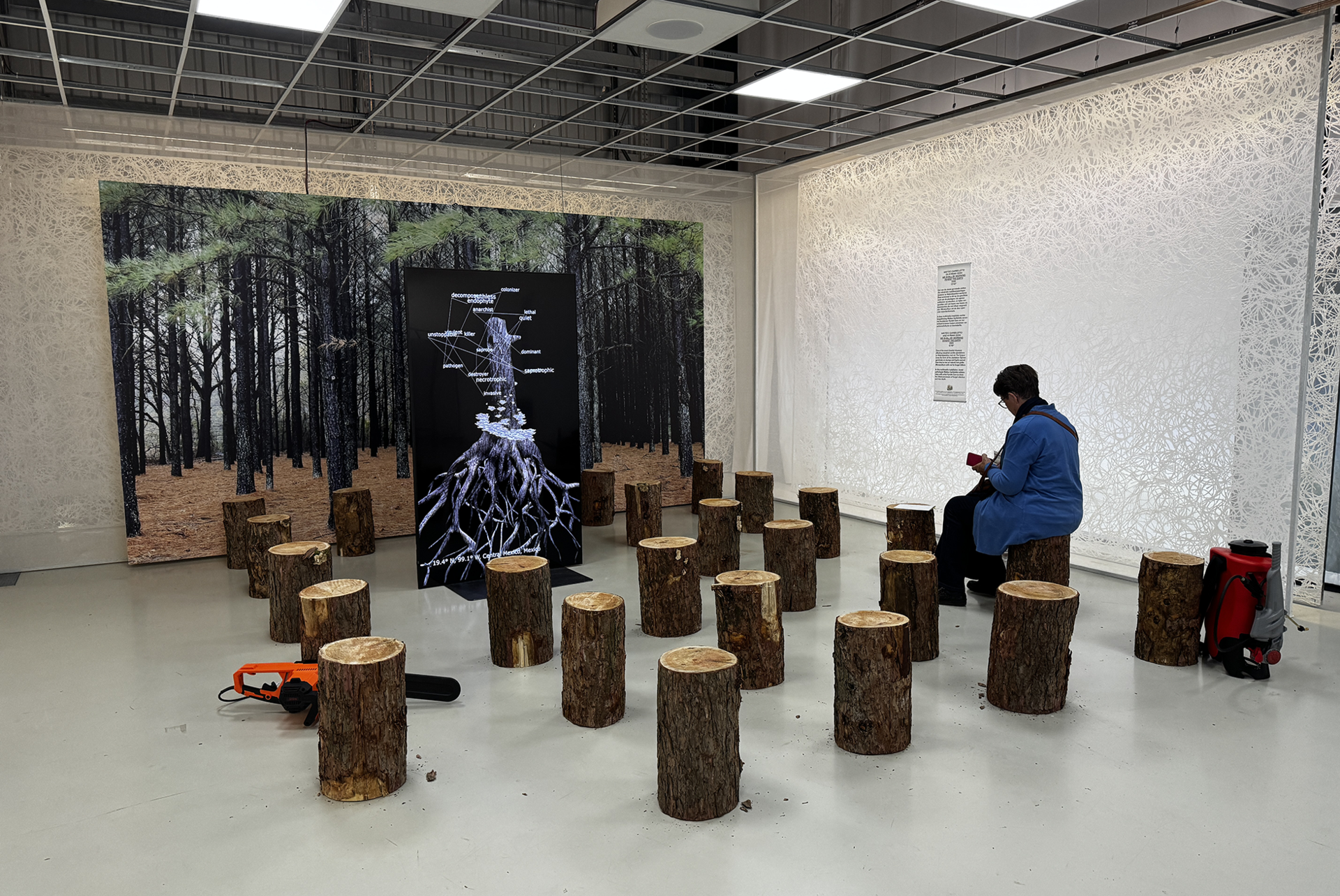
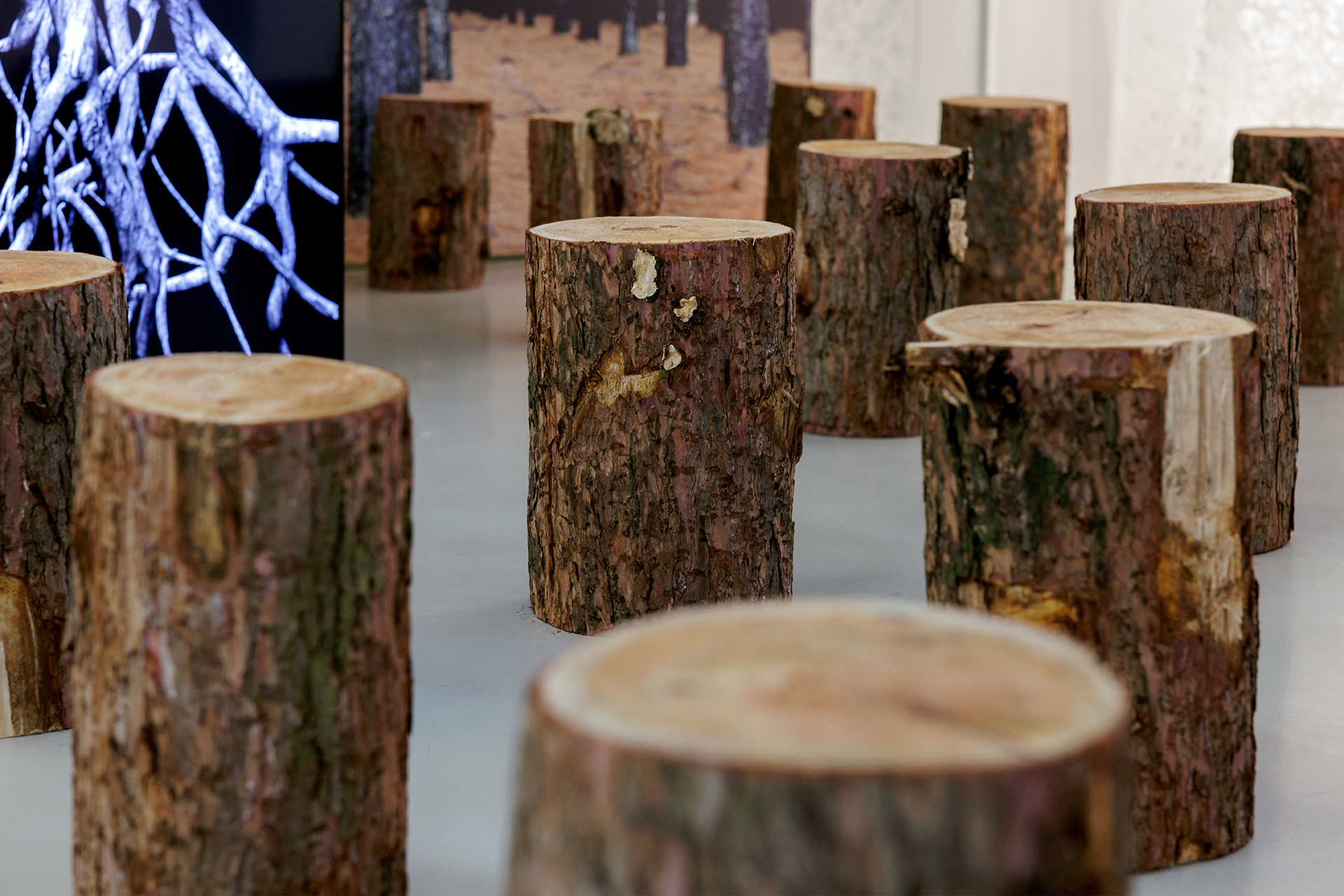
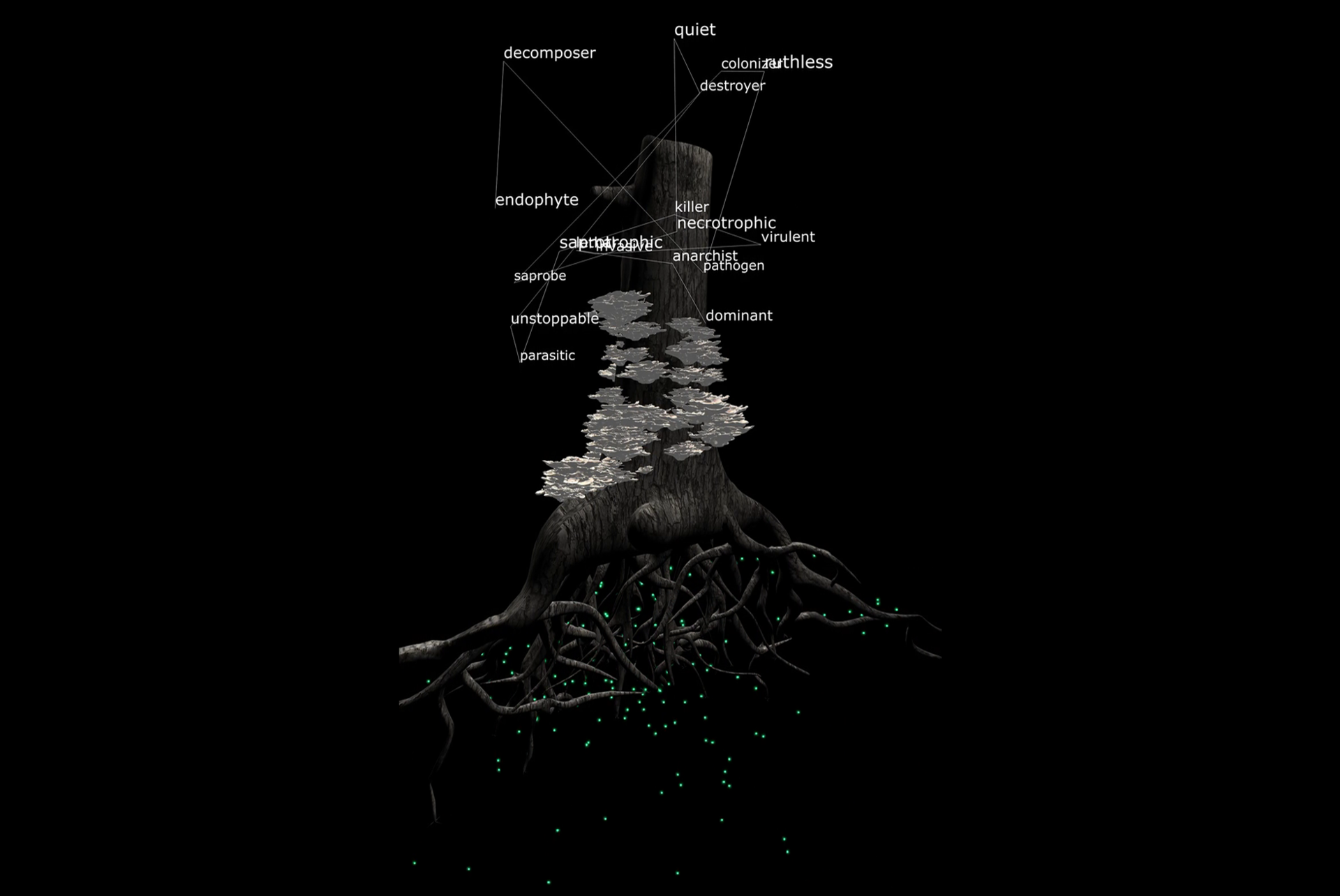
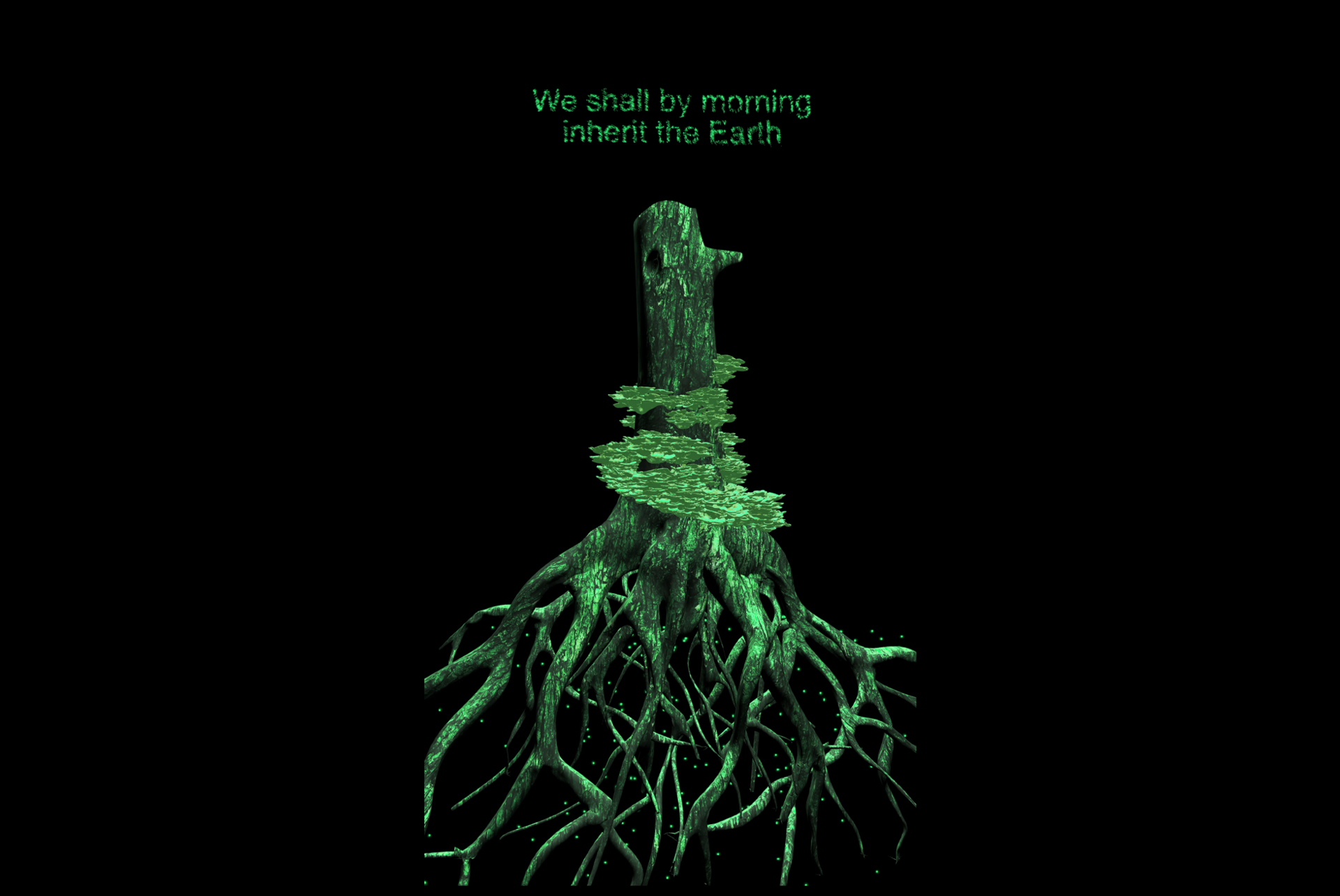
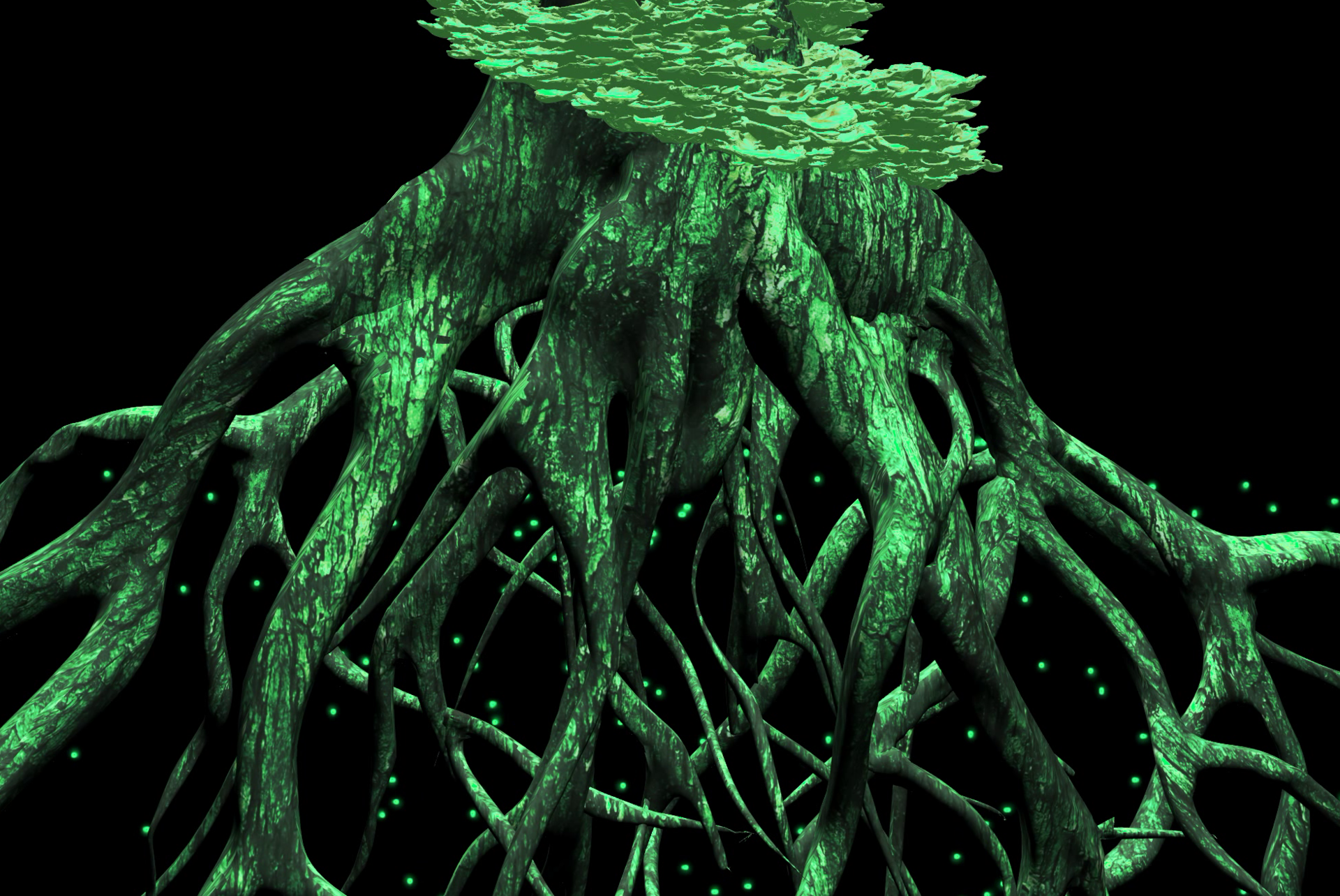


We Shall by Morning Inherit the Earth explores the hidden ecological forces that emerge in the aftermath of industrial forestry.
At the center of the work is Heterobasidion, a root-rot fungus that spreads through underground networks connecting trees. Often treated as a threat to timber production, the fungus becomes the protagonist of an alternative narrative—one in which decomposition, rather than growth, drives the future of the forest.
The installation unfolds through a constellation of objects, sounds, and moving images. A video portrait follows the gradual colonization of a tree stump by Heterobasidion, while tree stumps, fungal fruiting bodies, a decommissioned chainsaw, and a backpack sprayer trace the complex relationships between forestry, extraction, disease, and ecological succession.
A layered soundscape moves across different temporalities of the forest. Birds inhabit its recent past, chainsaws mark moments of rupture, and fungal growth points toward a future in which decomposers inherit landscapes transformed by human intervention.
While Heterobasidion is relatively rare in primary forests, plantation forestry creates ideal conditions for its spread. Logging wounds, stumps, and densely planted monocultures allow the fungus to travel through interconnected root systems, transforming entire forest stands. The work asks what happens when an organism considered undesirable from an economic perspective becomes a key agent of ecological renewal.
By shifting attention from trees to fungi, We Shall by Morning Inherit the Earth invites viewers to encounter the forest as a dynamic system of death, decay, and regeneration, where inheritance belongs not only to those who build ecosystems but also to those who dismantle them.
In collaboration with Dr. Matteo Garbelotto, Director Forest Pathology and Mycology Lab, U.C. Berkeley.
Commissioned by Het Nieuwe Instituut.
Umbigo Magazine From Satellites to Bees: Kyriaki Goni on Invisible Systems and Radical Hope